Every presentation of Morocco’s investment framework leads with the same number: support of up to 30% of the project amount. It is accurate, and it is almost never what an investor receives.
The 30% is a ceiling on the cumulative total of separate premiums, each with its own conditions. More importantly, both of the schemes that deliver those premiums screen projects at the door on a criterion that has nothing to do with how much capital you commit.
Here is how the arithmetic actually works.
Two schemes, two doors: both opening on jobs
The main support scheme applies to projects with a total amount of at least MAD 50 million creating at least 50 stable jobs, or, regardless of amount, to projects creating at least 150 stable jobs.
The SME scheme, introduced more recently by decree 2.25.342, covers projects between MAD 1 million and MAD 50 million, requiring at least 10% own funds, a business line listed as eligible for the region concerned, and a stable-job ratio of at least 1.5 per million dirhams invested, reduced to 1 for tourism.
Note what neither door tests: capital intensity, technology, export contribution or contribution to regional development. Both gates are employment gates. A project that creates few direct jobs does not receive a smaller premium. It does not enter.
“Stable job” is defined narrowly: a position created directly by the investor under a contract of at least eighteen consecutive months, filled by a Moroccan national registered with the CNSS. Outsourced services, however long the contract, do not count.
The MAD 50 million cliff
Because the two schemes were designed separately, they do not align at the boundary. Below the line a project can access three premiums; above it, seven. And identical job-creation performance is not worth the same on either side: four stable jobs per million invested earns 10% above the line and 5% below.
The practical consequence is that for any project sitting near MAD 50 million, the applicable scheme is a structuring outcome rather than a given, and the arithmetic of crossing is counter-intuitive enough to deserve its own treatment. We set it out separately in Above or below MAD 50 million: choosing between the Charter’s two support schemes.
For everything that follows, one point carries: the threshold governs which menu of premiums applies, and the largest item on that menu has nothing to do with the project itself.
The largest premium has nothing to do with your project
Under the main scheme, premiums come in three families. Common premiums reward job-creation ratio (5 to 10%), gender balance in payroll (3%), future-skills and upgrading sectors (3%), environmental performance (3%) and local integration (3%). A sector premium of 5% applies to industry, renewable energy, tourism and leisure, digital, logistics, aquaculture, cultural industries, waste recovery and outsourcing. And a territorial premium of 10% or 15% applies according to where the project is built.
The territorial premium is the largest single line available, and it is the only one that measures nothing about the project. It depends solely on the province.
Fifteen provinces and prefectures receive nothing: Casablanca, Rabat, Marrakech, Tanger-Assilah, Kenitra, Agadir Ida-Outanane, Mohammedia, Benslimane, Berrechid, Settat, El Jadida, Médiouna, Nouaceur, Skhirate-Témara and Fahs-Anjra. That list covers most of where foreign and diaspora capital actually goes.
The arithmetic consequence is rarely stated: add every common premium at its maximum, plus the sector premium, and a project outside those provinces reaches 27%. Inside them, the theoretical maximum drops to 12%. The advertised 30% is not merely hard to reach in the excluded provinces: it is unreachable.
A worked example
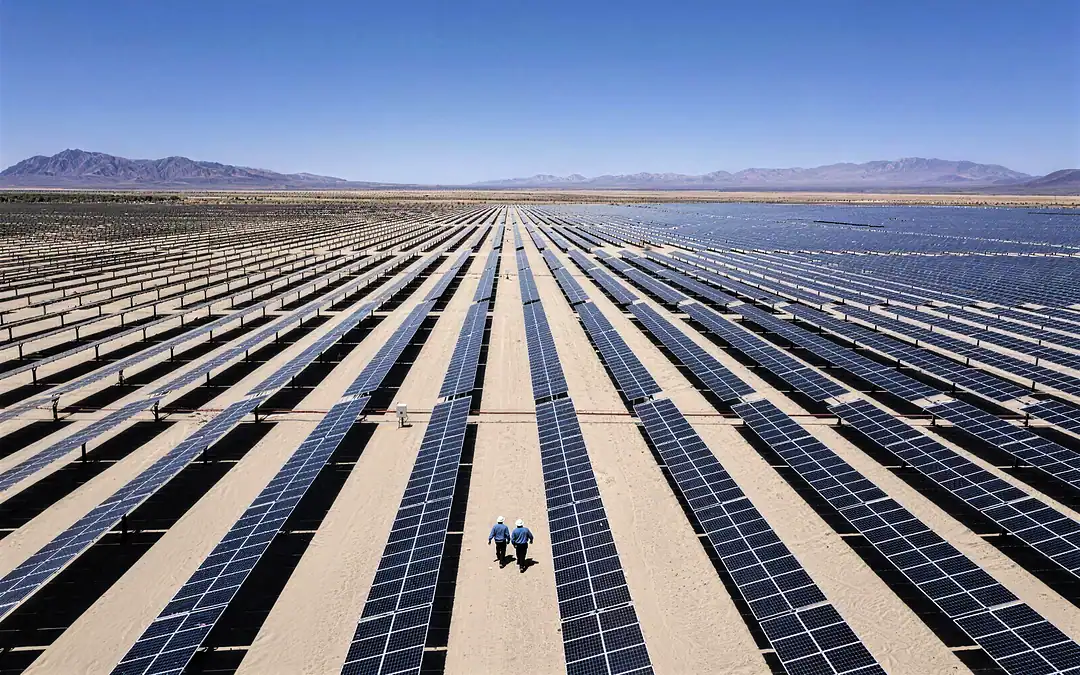
A utility-scale solar generation project, MAD 150 to 180 million of CAPEX, in a category B province, the highest territorial band at 15%.
The profile looks close to ideal. The province is one the framework explicitly aims to make more attractive. Renewable energy is one of the nine sectors carrying the 5% sector premium. The amount comfortably clears the MAD 50 million threshold of the main scheme.
Then the job test applies. Above MAD 50 million, the main scheme requires at least 50 stable jobs. A solar plant of this size employs five to eight people in operation, and maintenance is almost always contracted to a specialist company, which does not count as direct employment. The alternative door (150 jobs with no amount condition) is further still. There is no CAPEX at which this project passes.
The second constraint is more interesting, because it applies even to generation projects that do clear the gate. Support for renewable energy generation is capped at MAD 30 million in absolute terms, whatever the percentage calculation produces.
Take the stack this project would earn if the job criterion were met: 15% territorial plus 5% sector, 20% of MAD 165 million, or MAD 33 million. The cap cuts it to 30 million, an effective rate of 18.2%. Add an environmental premium and the answer does not change: the calculated amount rises, the payout does not.
With a 20% stack, the cap begins to bite at around MAD 150 million of eligible cost. Beyond that point, every additional dirham of CAPEX lowers the effective support rate: 18% at 165 million, 15% at 200 million, 10% at 300 million. For generation, the Charter is structurally more generous to mid-size projects than to large ones, the opposite of what the headline percentage suggests.
Nothing here is a drafting error. It is an unstated arbitration between two of the Charter’s own objectives. The territorial premium exists to draw investment toward less-favoured provinces. The projects that genuinely relocate to those provinces (generation, extraction, agro-industry, logistics) go there for land and resources, not for the labour pool, and are capital-intensive by nature. The entry criterion filters out precisely the category the territorial premium was designed to attract.
What this means by sector
Energy. Generation should be assessed against the job gate before anything else, and in most configurations discounted. Manufacturing sits on far more favourable ground: equipment and storage production appears on both the future-skills list and, under the SME scheme, the priority-activity list, carries no absolute cap, and clears the job ratios that generation cannot. Below MAD 50 million the asymmetry widens further: under the SME scheme, renewable electricity generation is an eligible business line but is absent from the priority-activity table, while manufacturing is on it.
Hospitality. The tourism job ratio is relaxed to 1 per million under the SME scheme, recognition that hotels are less labour-intensive per dirham than industry. But tourism-promotion residential developments are explicitly excluded from the eligible business line, and the three highest-demand cities (Marrakech, Casablanca, Agadir) carry no territorial premium at all. A project in Essaouira or Ouarzazate is supported on entirely different terms from the same project in Marrakech.
Industry. This is what the framework was built for. Manufacturing clears the job ratios, appears across the future-skills and priority lists, and can combine local integration with a territorial premium. The 30% is genuinely within reach here, and mainly here.
Four questions worth answering early
Does the project clear the job gate? It is the entry condition, not a scoring line. Every other calculation is wasted effort until it clears.
Which side of MAD 50 million is the project on? Below the line the project accesses three premiums, above it seven. Where CAPEX sits near the boundary, that is a structuring outcome rather than a given.
Does an absolute cap apply before the percentage does? On renewable generation it often will, and it changes the answer entirely on larger projects.
Is the premium modelled as deferred and conditional? Support is granted through an investment agreement approved by the regional or national commission, carries binding job and schedule commitments, and is disbursed against actual delivery. A cash-flow plan that treats it as upfront equity is wrong.
None of this is exotic. It is the arithmetic of the published framework, applied before rather than after a file is assembled, which is where most of the value, and most of the disappointment, is created.